Webster Model B-75 for Mild Steel & Brass
Webster Model B-75 for Mild Steel & Brass
Hardness tester Webster for Mild Steel & Brass
(Standard Capacity up to ¼")
Model B-75 Tester was developed to obtain a more sensitive response to slight changes in the upper range of hardness covered by Model B. This sensitivity is particularly useful in testing mild steel and stronger aluminum alloys. For brass, the B-75 covers the range from annealed to full-hard.
This added sensitivity is accomplished by incorporating a penetrator of a slightly different contour and a heavier load spring than used in Model B. The 20 graduations on the Webster dial indicator cover the range between 20 and 100 on the Rockwell B scale.
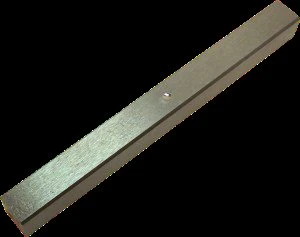
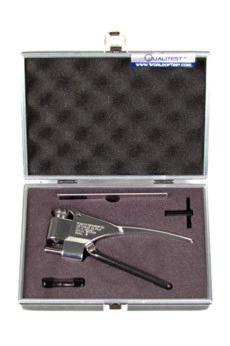
Each tester is shipped in a fitted case with a spare penetrator, adjusting wrench, and standard test strip.
Delivery may take up to approx. 4-6 weeks depending on stock availability. You can check the availability by calling 1.877.884.8378 or emailing: sales@qualitest-inc.com.
Webster Hardness Testers
Webster portable hardness testers are made in three distinct models for testing brass, aluminum, copper, and mild steel. They allow you to quickly identify tempers and test a variety of shapes that other models simply cannot check—including tubing, extrusions, and flat stock.
Every one of Webster's hardness tester models operates in the same manner. The only differences are in the type of load spring, hardness ranges, and penetrator design.
Model B Webster Hardness Tester
The Model B Webster Hardness Tester is designed to cover the hardness of aluminum alloys from the 100 to the 7075 series. The 20 graduations on the dial indicator cover the range between 25 and 110 on the Rockwell E Scale.
Model B-75 Webster Hardness Tester
Developed to obtain a more sensitive response to slight changes in the upper range of hardness covered by the Model B, the Model B-75 Webster Hardness Tester is particularly useful in testing the hardness of stronger aluminum alloys as well as of mild steel.
The B-75 Webster Hardness Tester covers the range from annealed to full-hard for brass. It is accomplished by incorporating a penetrator of slightly different contours and a heavier load spring than used in Model B, and the 20 graduations on the dial indicator cover the range between 20 and 100 on the Rockwell B Scale.
Model BB-75 Webster Hardness Tester
Certain industries needed a method of rapidly testing the hardness of electrodeposited copper in the low hardness range. The Model BB-75 Webster Hardness Tester was the solution. This penetrator is used to give sensitivity while the Model B load spring is employed to give light pressure. This combination allows users to test the soft range of many common materials.
Operation of Webster Hardness Testers
|
The operation of Webster Hardness Testers is simple. The work being tested is placed between the anvil and the penetrator. Pressure is then applied to the handles until the “bottom” is felt, then the dial indicator is read. |
Applications for WEBSTER Hardness Testers:
- Can Be Used on Assemblies That Cannot Be Brought to the Labs
- Checks for Proper Heat-Treatment Response
- Differentiates Between Soft or Work-Hardened Material
- Gives a Rapid 100% Check on Parts That Would Normally Take a Long Time to Test
- Identifies Heat-Treated Parts
- Identifies Parts Made from Improper or Substandard Alloys
- Provides Correlation Between a Bench-Mounted Hardness Tester and the Production Line
- Segregates Materials in Stock
- Useful in Conjunction with Stationary Laboratory Hardness Testing Tools
Features of Webster Hardness Testers:
- Can Be Operated with One Hand
- Easy-to-Read Dial Indicator with 20 Graduations Permits Use as a “Go” and “No-Go” Gauge
- Round 3/8-Inch Diameter Anvil Can Test a Variety of Shapes
- Simple Operation Permits Readings Independent of the Operator’s Skill
- Tests Materials Up to 1/4 Inch in Thickness with Increased Capacities Available Up to 1 Inch
- Test Only Requires Applying Pressure to the Handles Until the “Bottom” Is Felt
Click Here to visit the product webpage
Product Information
Product Information
Shipping & Returns
Shipping & Returns


Webster Model B-75 for Mild Steel & Brass
Webster Model B-75 for Mild Steel & Brass
Webster Model B-75 for Mild Steel & Brass
Hardness tester Webster for Mild Steel & Brass
(Standard Capacity up to ¼")
Model B-75 Tester was developed to obtain a more sensitive response to slight changes in the upper range of hardness covered by Model B. This sensitivity is particularly useful in testing mild steel and stronger aluminum alloys. For brass, the B-75 covers the range from annealed to full-hard.
This added sensitivity is accomplished by incorporating a penetrator of a slightly different contour and a heavier load spring than used in Model B. The 20 graduations on the Webster dial indicator cover the range between 20 and 100 on the Rockwell B scale.
Each tester is shipped in a fitted case with a spare penetrator, adjusting wrench, and standard test strip.
Delivery may take up to approx. 4-6 weeks depending on stock availability. You can check the availability by calling 1.877.884.8378 or emailing: sales@qualitest-inc.com.
Webster Hardness Testers
Webster portable hardness testers are made in three distinct models for testing brass, aluminum, copper, and mild steel. They allow you to quickly identify tempers and test a variety of shapes that other models simply cannot check—including tubing, extrusions, and flat stock.
Every one of Webster's hardness tester models operates in the same manner. The only differences are in the type of load spring, hardness ranges, and penetrator design.
Model B Webster Hardness Tester
The Model B Webster Hardness Tester is designed to cover the hardness of aluminum alloys from the 100 to the 7075 series. The 20 graduations on the dial indicator cover the range between 25 and 110 on the Rockwell E Scale.
Model B-75 Webster Hardness Tester
Developed to obtain a more sensitive response to slight changes in the upper range of hardness covered by the Model B, the Model B-75 Webster Hardness Tester is particularly useful in testing the hardness of stronger aluminum alloys as well as of mild steel.
The B-75 Webster Hardness Tester covers the range from annealed to full-hard for brass. It is accomplished by incorporating a penetrator of slightly different contours and a heavier load spring than used in Model B, and the 20 graduations on the dial indicator cover the range between 20 and 100 on the Rockwell B Scale.
Model BB-75 Webster Hardness Tester
Certain industries needed a method of rapidly testing the hardness of electrodeposited copper in the low hardness range. The Model BB-75 Webster Hardness Tester was the solution. This penetrator is used to give sensitivity while the Model B load spring is employed to give light pressure. This combination allows users to test the soft range of many common materials.
Operation of Webster Hardness Testers
|
The operation of Webster Hardness Testers is simple. The work being tested is placed between the anvil and the penetrator. Pressure is then applied to the handles until the “bottom” is felt, then the dial indicator is read. |
Applications for WEBSTER Hardness Testers:
- Can Be Used on Assemblies That Cannot Be Brought to the Labs
- Checks for Proper Heat-Treatment Response
- Differentiates Between Soft or Work-Hardened Material
- Gives a Rapid 100% Check on Parts That Would Normally Take a Long Time to Test
- Identifies Heat-Treated Parts
- Identifies Parts Made from Improper or Substandard Alloys
- Provides Correlation Between a Bench-Mounted Hardness Tester and the Production Line
- Segregates Materials in Stock
- Useful in Conjunction with Stationary Laboratory Hardness Testing Tools
Features of Webster Hardness Testers:
- Can Be Operated with One Hand
- Easy-to-Read Dial Indicator with 20 Graduations Permits Use as a “Go” and “No-Go” Gauge
- Round 3/8-Inch Diameter Anvil Can Test a Variety of Shapes
- Simple Operation Permits Readings Independent of the Operator’s Skill
- Tests Materials Up to 1/4 Inch in Thickness with Increased Capacities Available Up to 1 Inch
- Test Only Requires Applying Pressure to the Handles Until the “Bottom” Is Felt
Click Here to visit the product webpage
Product Information
Product Information
Shipping & Returns
Shipping & Returns
Description
Webster Model B-75 for Mild Steel & Brass
Hardness tester Webster for Mild Steel & Brass
(Standard Capacity up to ¼")
Model B-75 Tester was developed to obtain a more sensitive response to slight changes in the upper range of hardness covered by Model B. This sensitivity is particularly useful in testing mild steel and stronger aluminum alloys. For brass, the B-75 covers the range from annealed to full-hard.
This added sensitivity is accomplished by incorporating a penetrator of a slightly different contour and a heavier load spring than used in Model B. The 20 graduations on the Webster dial indicator cover the range between 20 and 100 on the Rockwell B scale.
Each tester is shipped in a fitted case with a spare penetrator, adjusting wrench, and standard test strip.
Delivery may take up to approx. 4-6 weeks depending on stock availability. You can check the availability by calling 1.877.884.8378 or emailing: sales@qualitest-inc.com.
Webster Hardness Testers
Webster portable hardness testers are made in three distinct models for testing brass, aluminum, copper, and mild steel. They allow you to quickly identify tempers and test a variety of shapes that other models simply cannot check—including tubing, extrusions, and flat stock.
Every one of Webster's hardness tester models operates in the same manner. The only differences are in the type of load spring, hardness ranges, and penetrator design.
Model B Webster Hardness Tester
The Model B Webster Hardness Tester is designed to cover the hardness of aluminum alloys from the 100 to the 7075 series. The 20 graduations on the dial indicator cover the range between 25 and 110 on the Rockwell E Scale.
Model B-75 Webster Hardness Tester
Developed to obtain a more sensitive response to slight changes in the upper range of hardness covered by the Model B, the Model B-75 Webster Hardness Tester is particularly useful in testing the hardness of stronger aluminum alloys as well as of mild steel.
The B-75 Webster Hardness Tester covers the range from annealed to full-hard for brass. It is accomplished by incorporating a penetrator of slightly different contours and a heavier load spring than used in Model B, and the 20 graduations on the dial indicator cover the range between 20 and 100 on the Rockwell B Scale.
Model BB-75 Webster Hardness Tester
Certain industries needed a method of rapidly testing the hardness of electrodeposited copper in the low hardness range. The Model BB-75 Webster Hardness Tester was the solution. This penetrator is used to give sensitivity while the Model B load spring is employed to give light pressure. This combination allows users to test the soft range of many common materials.
Operation of Webster Hardness Testers
|
The operation of Webster Hardness Testers is simple. The work being tested is placed between the anvil and the penetrator. Pressure is then applied to the handles until the “bottom” is felt, then the dial indicator is read. |
Applications for WEBSTER Hardness Testers:
- Can Be Used on Assemblies That Cannot Be Brought to the Labs
- Checks for Proper Heat-Treatment Response
- Differentiates Between Soft or Work-Hardened Material
- Gives a Rapid 100% Check on Parts That Would Normally Take a Long Time to Test
- Identifies Heat-Treated Parts
- Identifies Parts Made from Improper or Substandard Alloys
- Provides Correlation Between a Bench-Mounted Hardness Tester and the Production Line
- Segregates Materials in Stock
- Useful in Conjunction with Stationary Laboratory Hardness Testing Tools
Features of Webster Hardness Testers:
- Can Be Operated with One Hand
- Easy-to-Read Dial Indicator with 20 Graduations Permits Use as a “Go” and “No-Go” Gauge
- Round 3/8-Inch Diameter Anvil Can Test a Variety of Shapes
- Simple Operation Permits Readings Independent of the Operator’s Skill
- Tests Materials Up to 1/4 Inch in Thickness with Increased Capacities Available Up to 1 Inch
- Test Only Requires Applying Pressure to the Handles Until the “Bottom” Is Felt
Click Here to visit the product webpage