Salt Spray Chamber - Salt Spray Tester - Fog Cabinet
Salt Spray Testers provide accelerated corrosion testing for coated and uncoated materials. Use them to verify coating quality, stabilize finishing processes, and compare batch performance with fast, repeatable results.
Why teams choose this chamber
- Catch coating or pre-treatment issues early before parts reach customers
- Qualify vendors and incoming lots with objective pass or fail criteria
- Shorten feedback loops for paint lines, plating, and galvanizing
- Document performance for audits and customer specifications
- Lower scrap and rework by keeping processes in control
How salt spray testing helps
Salt spray testing exposes samples to a controlled salt fog to evaluate corrosion resistance. The test is comparative and time based. Inspect for corrosion products such as rust or oxides after a specified duration. Higher resistance usually means longer times to first corrosion.
Salt spray vs cyclic corrosion
Salt spray is ideal for fast comparative checks and daily quality control. It does not replicate complex real-world environments. For more realistic field correlation, consider Cyclic Corrosion Test Chambers.
Standards and compliance
Conforms to international standards including ASTM B117, ISO 9227, JIS Z 2371, and ASTM G85. Additional related methods supported include ISO 4611, ISO 7253, ASTM B368, ASTM B380, ASTM D1735, and DIN 50021.
Available models
- Salt Spray Chamber – Salt Spray Tester – Fog Cabinet
- Programmable Salt Spray Test Chambers
- Cyclic Corrosion Test Chamber
Best for quality control
Most production teams use salt spray testing to maintain process stability for pre-treatment and painting, electroplating, and galvanizing. For example, a 96-hour neutral salt spray requirement is common for pre-treated and painted components.
If a batch fails an established time-to-corrosion criterion, investigate the pre-treatment chemistry or paint quality. Faster feedback reduces non-conforming batches and protects delivery schedules.
Salt Spray Chamber Design Highlights
Cabinet and build
- 5 mm PVC chamber body rated to 85 °C for long service life
- 6 mm clear acrylic sealing cover for easy viewing
- Water-sealed working room to prevent fog leakage
- Separated electrical and water systems to protect components
- Adjustable specimen racks for even fog distribution
Atomization and fog control
- Glass nozzle based on Bernoulli principle for uniform, stable fog
- Adjustable atomizing tower height to fine-tune distribution
- Tapered fog collectors with external graduated cylinders for monitoring
- Adjustable spray pressure from 0.07 MPa to 0.17 MPa
Heating and humidity
- Titanium alloy working-room heater with precise PID control
- SUS316 heater for the humidifying tower
- SSR control for stable heating and fast recovery
Controls and safety
- Omron E5CC digital temperature controller with English menu
- Programmable timer with flexible test cycles
- Over-temperature, water level, and leakage protection
- Anti-dry protection on all heaters plus earth leakage, overload, and short-circuit safeguards
Technical Specifications
- Working Room Temperature: RT to 50 °C
- Humidifying Tower Temperature: RT to 63 °C
- Temperature Uniformity: ≤ ±2 °C (no load)
- Temperature Stability: ≤ ±0.5 °C (no load)
- Working Room Deviation: ±1.0 °C
- Heat-up, Working Room: RT to 55 °C in less than 60 minutes
- Heat-up, Saturated Barrel: RT to 63 °C in less than 60 minutes
- Compressed Air Supply: Clean, dry, oil-free air at 0.4 MPa to 0.8 MPa
| Ordering Information → Technical Parameters ↓ | QSST-108L | QSST-270L | QSST-480L | QSST-800L |
|---|---|---|---|---|
| Working Room Size (W × H × D), mm | 600 × 400 × 450 | 900 × 500 × 600 | 1200 × 500 × 800 | 1600 × 800 × 1000 |
| Working Room Capacity (without V-cover) | 108 L | 270 L | 480 L | 800 L |
| V-cover Volume (approx.) | 50 L | 140 L | 250 L | 380 L |
| Overall Size (W × H × D), mm | 1150 × 1090 × 672 | 1550 × 1240 × 900 | 1980 × 1350 × 1100 | 2480 × 1450 × 1250 |
| Sample Holders / Poles (V-type) | 4 / 6 | 6 / 12 | 8 / 16 | 10 / 22 |
| Max Sample Capacity (15 cm × 7 cm) | 28 pcs | 70 pcs | 108 pcs | 120 pcs |
| Cover Opening | Manual | Manual | Pneumatic | Pneumatic |
| Total Power | 2.2 kW | 2.2 kW | 3.8 kW | 3.8 kW |
| Salt Solution Consumption | 15 L/day | 15 L/day | 25 L/day | 25 L/day |
| Heating Water Consumption | 30 L/day | 30 L/day | 40 L/day | 40 L/day |
| Compressed Air Consumption | 1 m³/h | 1 m³/h | 2 m³/h | 2 m³/h |
| Power Supply | 220 V, 50/60 Hz. 110 V available upon request | |||
Optional accessories
- QSST-1356 Glass Spray Nozzle
- QSST-2309 CR-4 Steel Panels for Salt Spray Calibration (ISO 3574, 20 pcs per pack)
Stock and lead time depend on chamber size and configuration.
Product Information
Product Information
Shipping & Returns
Shipping & Returns

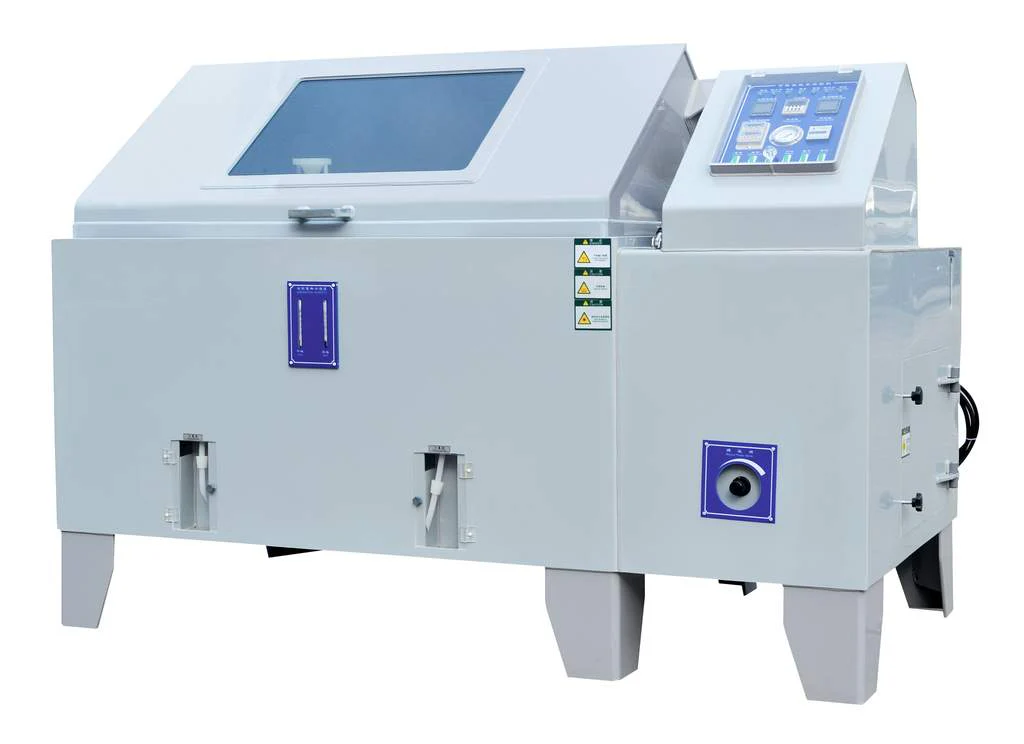
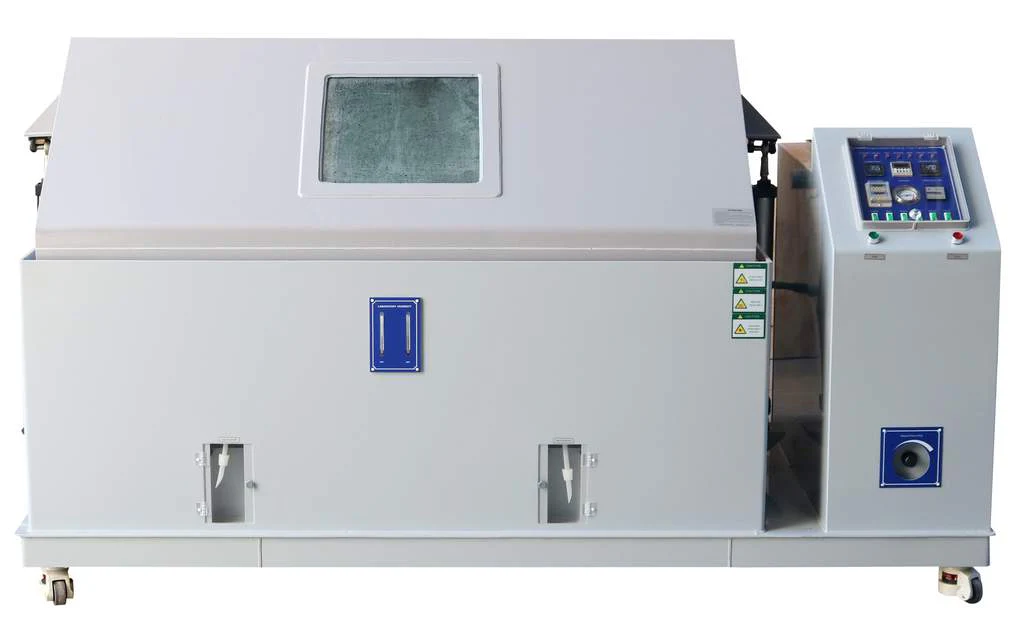
Salt Spray Chamber - Salt Spray Tester - Fog Cabinet
Salt Spray Chamber - Salt Spray Tester - Fog Cabinet
Salt Spray Testers provide accelerated corrosion testing for coated and uncoated materials. Use them to verify coating quality, stabilize finishing processes, and compare batch performance with fast, repeatable results.
Why teams choose this chamber
- Catch coating or pre-treatment issues early before parts reach customers
- Qualify vendors and incoming lots with objective pass or fail criteria
- Shorten feedback loops for paint lines, plating, and galvanizing
- Document performance for audits and customer specifications
- Lower scrap and rework by keeping processes in control
How salt spray testing helps
Salt spray testing exposes samples to a controlled salt fog to evaluate corrosion resistance. The test is comparative and time based. Inspect for corrosion products such as rust or oxides after a specified duration. Higher resistance usually means longer times to first corrosion.
Salt spray vs cyclic corrosion
Salt spray is ideal for fast comparative checks and daily quality control. It does not replicate complex real-world environments. For more realistic field correlation, consider Cyclic Corrosion Test Chambers.
Standards and compliance
Conforms to international standards including ASTM B117, ISO 9227, JIS Z 2371, and ASTM G85. Additional related methods supported include ISO 4611, ISO 7253, ASTM B368, ASTM B380, ASTM D1735, and DIN 50021.
Available models
- Salt Spray Chamber – Salt Spray Tester – Fog Cabinet
- Programmable Salt Spray Test Chambers
- Cyclic Corrosion Test Chamber
Best for quality control
Most production teams use salt spray testing to maintain process stability for pre-treatment and painting, electroplating, and galvanizing. For example, a 96-hour neutral salt spray requirement is common for pre-treated and painted components.
If a batch fails an established time-to-corrosion criterion, investigate the pre-treatment chemistry or paint quality. Faster feedback reduces non-conforming batches and protects delivery schedules.
Salt Spray Chamber Design Highlights
Cabinet and build
- 5 mm PVC chamber body rated to 85 °C for long service life
- 6 mm clear acrylic sealing cover for easy viewing
- Water-sealed working room to prevent fog leakage
- Separated electrical and water systems to protect components
- Adjustable specimen racks for even fog distribution
Atomization and fog control
- Glass nozzle based on Bernoulli principle for uniform, stable fog
- Adjustable atomizing tower height to fine-tune distribution
- Tapered fog collectors with external graduated cylinders for monitoring
- Adjustable spray pressure from 0.07 MPa to 0.17 MPa
Heating and humidity
- Titanium alloy working-room heater with precise PID control
- SUS316 heater for the humidifying tower
- SSR control for stable heating and fast recovery
Controls and safety
- Omron E5CC digital temperature controller with English menu
- Programmable timer with flexible test cycles
- Over-temperature, water level, and leakage protection
- Anti-dry protection on all heaters plus earth leakage, overload, and short-circuit safeguards
Technical Specifications
- Working Room Temperature: RT to 50 °C
- Humidifying Tower Temperature: RT to 63 °C
- Temperature Uniformity: ≤ ±2 °C (no load)
- Temperature Stability: ≤ ±0.5 °C (no load)
- Working Room Deviation: ±1.0 °C
- Heat-up, Working Room: RT to 55 °C in less than 60 minutes
- Heat-up, Saturated Barrel: RT to 63 °C in less than 60 minutes
- Compressed Air Supply: Clean, dry, oil-free air at 0.4 MPa to 0.8 MPa
| Ordering Information → Technical Parameters ↓ | QSST-108L | QSST-270L | QSST-480L | QSST-800L |
|---|---|---|---|---|
| Working Room Size (W × H × D), mm | 600 × 400 × 450 | 900 × 500 × 600 | 1200 × 500 × 800 | 1600 × 800 × 1000 |
| Working Room Capacity (without V-cover) | 108 L | 270 L | 480 L | 800 L |
| V-cover Volume (approx.) | 50 L | 140 L | 250 L | 380 L |
| Overall Size (W × H × D), mm | 1150 × 1090 × 672 | 1550 × 1240 × 900 | 1980 × 1350 × 1100 | 2480 × 1450 × 1250 |
| Sample Holders / Poles (V-type) | 4 / 6 | 6 / 12 | 8 / 16 | 10 / 22 |
| Max Sample Capacity (15 cm × 7 cm) | 28 pcs | 70 pcs | 108 pcs | 120 pcs |
| Cover Opening | Manual | Manual | Pneumatic | Pneumatic |
| Total Power | 2.2 kW | 2.2 kW | 3.8 kW | 3.8 kW |
| Salt Solution Consumption | 15 L/day | 15 L/day | 25 L/day | 25 L/day |
| Heating Water Consumption | 30 L/day | 30 L/day | 40 L/day | 40 L/day |
| Compressed Air Consumption | 1 m³/h | 1 m³/h | 2 m³/h | 2 m³/h |
| Power Supply | 220 V, 50/60 Hz. 110 V available upon request | |||
Optional accessories
- QSST-1356 Glass Spray Nozzle
- QSST-2309 CR-4 Steel Panels for Salt Spray Calibration (ISO 3574, 20 pcs per pack)
Stock and lead time depend on chamber size and configuration.
Product Information
Product Information
Shipping & Returns
Shipping & Returns
Description
Salt Spray Testers provide accelerated corrosion testing for coated and uncoated materials. Use them to verify coating quality, stabilize finishing processes, and compare batch performance with fast, repeatable results.
Why teams choose this chamber
- Catch coating or pre-treatment issues early before parts reach customers
- Qualify vendors and incoming lots with objective pass or fail criteria
- Shorten feedback loops for paint lines, plating, and galvanizing
- Document performance for audits and customer specifications
- Lower scrap and rework by keeping processes in control
How salt spray testing helps
Salt spray testing exposes samples to a controlled salt fog to evaluate corrosion resistance. The test is comparative and time based. Inspect for corrosion products such as rust or oxides after a specified duration. Higher resistance usually means longer times to first corrosion.
Salt spray vs cyclic corrosion
Salt spray is ideal for fast comparative checks and daily quality control. It does not replicate complex real-world environments. For more realistic field correlation, consider Cyclic Corrosion Test Chambers.
Standards and compliance
Conforms to international standards including ASTM B117, ISO 9227, JIS Z 2371, and ASTM G85. Additional related methods supported include ISO 4611, ISO 7253, ASTM B368, ASTM B380, ASTM D1735, and DIN 50021.
Available models
- Salt Spray Chamber – Salt Spray Tester – Fog Cabinet
- Programmable Salt Spray Test Chambers
- Cyclic Corrosion Test Chamber
Best for quality control
Most production teams use salt spray testing to maintain process stability for pre-treatment and painting, electroplating, and galvanizing. For example, a 96-hour neutral salt spray requirement is common for pre-treated and painted components.
If a batch fails an established time-to-corrosion criterion, investigate the pre-treatment chemistry or paint quality. Faster feedback reduces non-conforming batches and protects delivery schedules.
Salt Spray Chamber Design Highlights
Cabinet and build
- 5 mm PVC chamber body rated to 85 °C for long service life
- 6 mm clear acrylic sealing cover for easy viewing
- Water-sealed working room to prevent fog leakage
- Separated electrical and water systems to protect components
- Adjustable specimen racks for even fog distribution
Atomization and fog control
- Glass nozzle based on Bernoulli principle for uniform, stable fog
- Adjustable atomizing tower height to fine-tune distribution
- Tapered fog collectors with external graduated cylinders for monitoring
- Adjustable spray pressure from 0.07 MPa to 0.17 MPa
Heating and humidity
- Titanium alloy working-room heater with precise PID control
- SUS316 heater for the humidifying tower
- SSR control for stable heating and fast recovery
Controls and safety
- Omron E5CC digital temperature controller with English menu
- Programmable timer with flexible test cycles
- Over-temperature, water level, and leakage protection
- Anti-dry protection on all heaters plus earth leakage, overload, and short-circuit safeguards
Technical Specifications
- Working Room Temperature: RT to 50 °C
- Humidifying Tower Temperature: RT to 63 °C
- Temperature Uniformity: ≤ ±2 °C (no load)
- Temperature Stability: ≤ ±0.5 °C (no load)
- Working Room Deviation: ±1.0 °C
- Heat-up, Working Room: RT to 55 °C in less than 60 minutes
- Heat-up, Saturated Barrel: RT to 63 °C in less than 60 minutes
- Compressed Air Supply: Clean, dry, oil-free air at 0.4 MPa to 0.8 MPa
| Ordering Information → Technical Parameters ↓ | QSST-108L | QSST-270L | QSST-480L | QSST-800L |
|---|---|---|---|---|
| Working Room Size (W × H × D), mm | 600 × 400 × 450 | 900 × 500 × 600 | 1200 × 500 × 800 | 1600 × 800 × 1000 |
| Working Room Capacity (without V-cover) | 108 L | 270 L | 480 L | 800 L |
| V-cover Volume (approx.) | 50 L | 140 L | 250 L | 380 L |
| Overall Size (W × H × D), mm | 1150 × 1090 × 672 | 1550 × 1240 × 900 | 1980 × 1350 × 1100 | 2480 × 1450 × 1250 |
| Sample Holders / Poles (V-type) | 4 / 6 | 6 / 12 | 8 / 16 | 10 / 22 |
| Max Sample Capacity (15 cm × 7 cm) | 28 pcs | 70 pcs | 108 pcs | 120 pcs |
| Cover Opening | Manual | Manual | Pneumatic | Pneumatic |
| Total Power | 2.2 kW | 2.2 kW | 3.8 kW | 3.8 kW |
| Salt Solution Consumption | 15 L/day | 15 L/day | 25 L/day | 25 L/day |
| Heating Water Consumption | 30 L/day | 30 L/day | 40 L/day | 40 L/day |
| Compressed Air Consumption | 1 m³/h | 1 m³/h | 2 m³/h | 2 m³/h |
| Power Supply | 220 V, 50/60 Hz. 110 V available upon request | |||
Optional accessories
- QSST-1356 Glass Spray Nozzle
- QSST-2309 CR-4 Steel Panels for Salt Spray Calibration (ISO 3574, 20 pcs per pack)
Stock and lead time depend on chamber size and configuration.